Minneapolis- St. Paul, MN
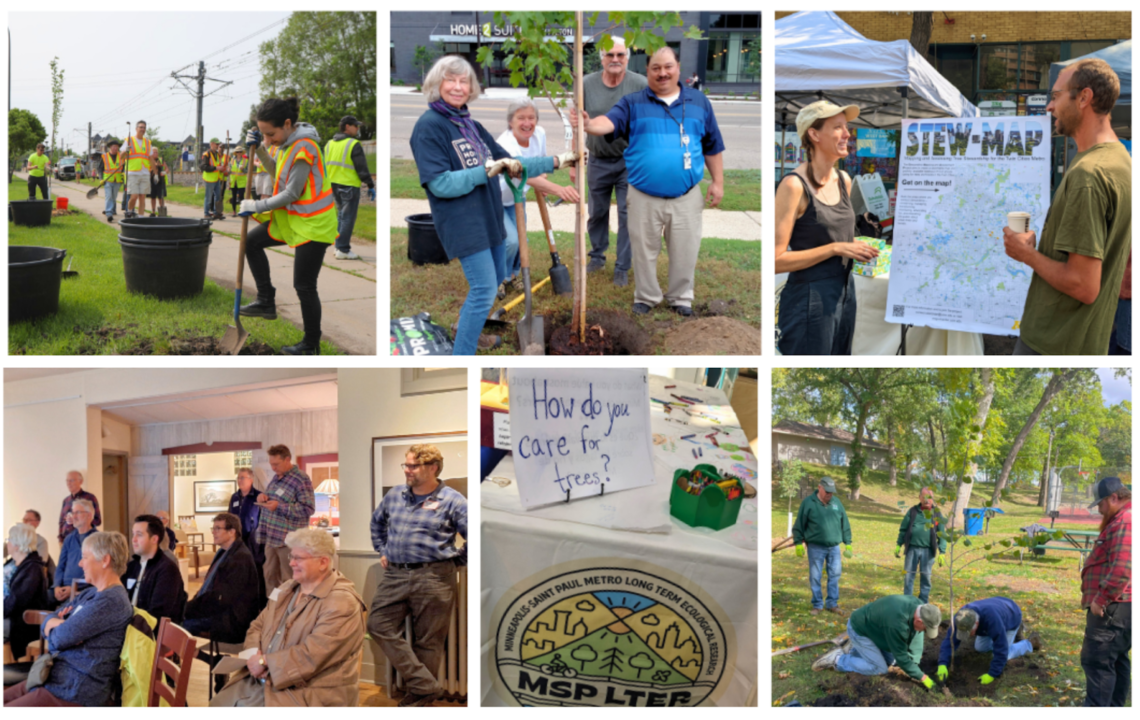
The Minneapolis-St. Paul STEW-MAP aims to document the organizational characteristics, geographic footprint, and social network dynamics of groups engaged in tree and forest stewardship throughout the Twin Cities Metropolitan Area. This project is led by the Minneapolis-St. Paul Long Term Ecological Research Program, in collaboration with the USDA Forest Service and the Minnesota Department of Natural Resources.
Between 2022 and 2023, we surveyed 323 civic environmental organizations involved in urban and community forestry activities across the metropolitan region. We received a 25% response rate. Among respondents, municipal governments represented the largest share (38%), followed by neighborhood associations (25%) and nonprofits (15%).
More than one-third of the responding groups (38%) focus almost exclusively on tree- and forest-related work. However, for many others, these activities are just one part of broader stewardship efforts: nearly 20% dedicate less than a quarter of their programming to trees, while the remaining groups allocate about half of their activities to tree stewardship. When asked about their primary stewardship activity overall—which includes trees as well as other stewardship efforts—most groups (37%) identified management. However, when focusing specifically on tree-related actions, the majority emphasized tree planting (82%) and advocacy and education (71%).
The location of where groups conduct stewardship reflects their focus on trees and forests. When asked about the general areas they operate in, most groups reported working in recreational spaces (65%) and forests (53%). However, when asked to identify their primary site of stewardship, the most frequent response was public rights-of-way (30%), emphasizing street and boulevards as a strong focus for tree and forest stewardship in the region.
In addition to core STEW-MAP questions– such as group characteristics, location, and relationships– we also asked groups how they advocate for policy change and select climate-adapted tree species. These responses contribute to ongoing research conducted by the Minneapolis-St. Paul Long Term Ecological Research Program.
To explore our interactive map, view the network diagram, and learn about upcoming events, email us at [email protected] or visit our project website: https://msp-lter.github.io/stewmap/
Point of contact: Sally Donovan

